OpenServ Reasoning
AI · LLM infrastructureOpenServ · 2026
A commercial LLM inference gateway, drop-in compatible with OpenAI and Anthropic SDKs, that wraps every model call in a reasoning harness of prompt optimization, safety guardrails, and structured-output validation with auto-repair, all metered against prepaid credits.
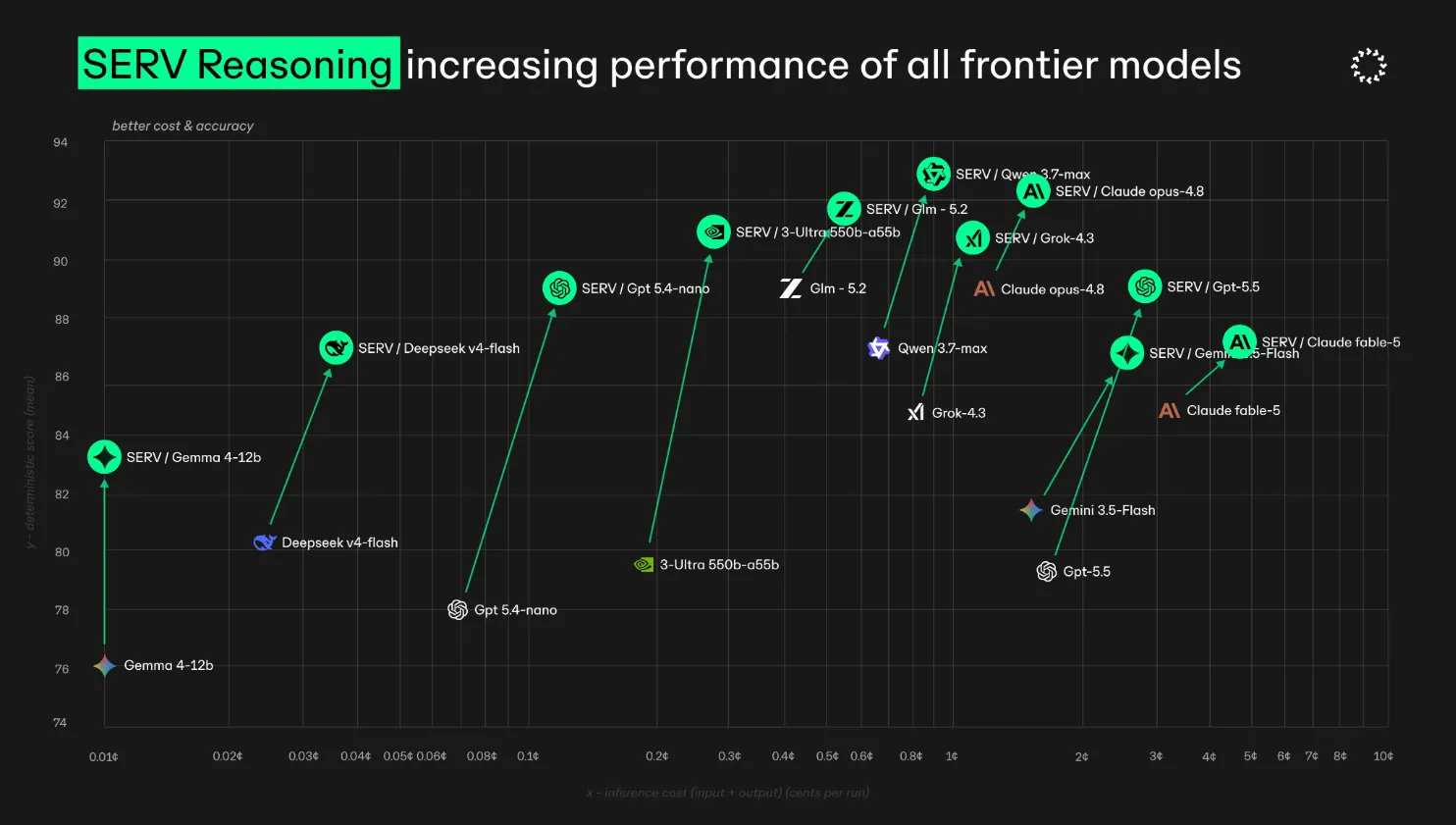
I helped develop an optimization layer that improves the accuracy and cost of frontier LLM models.
Context
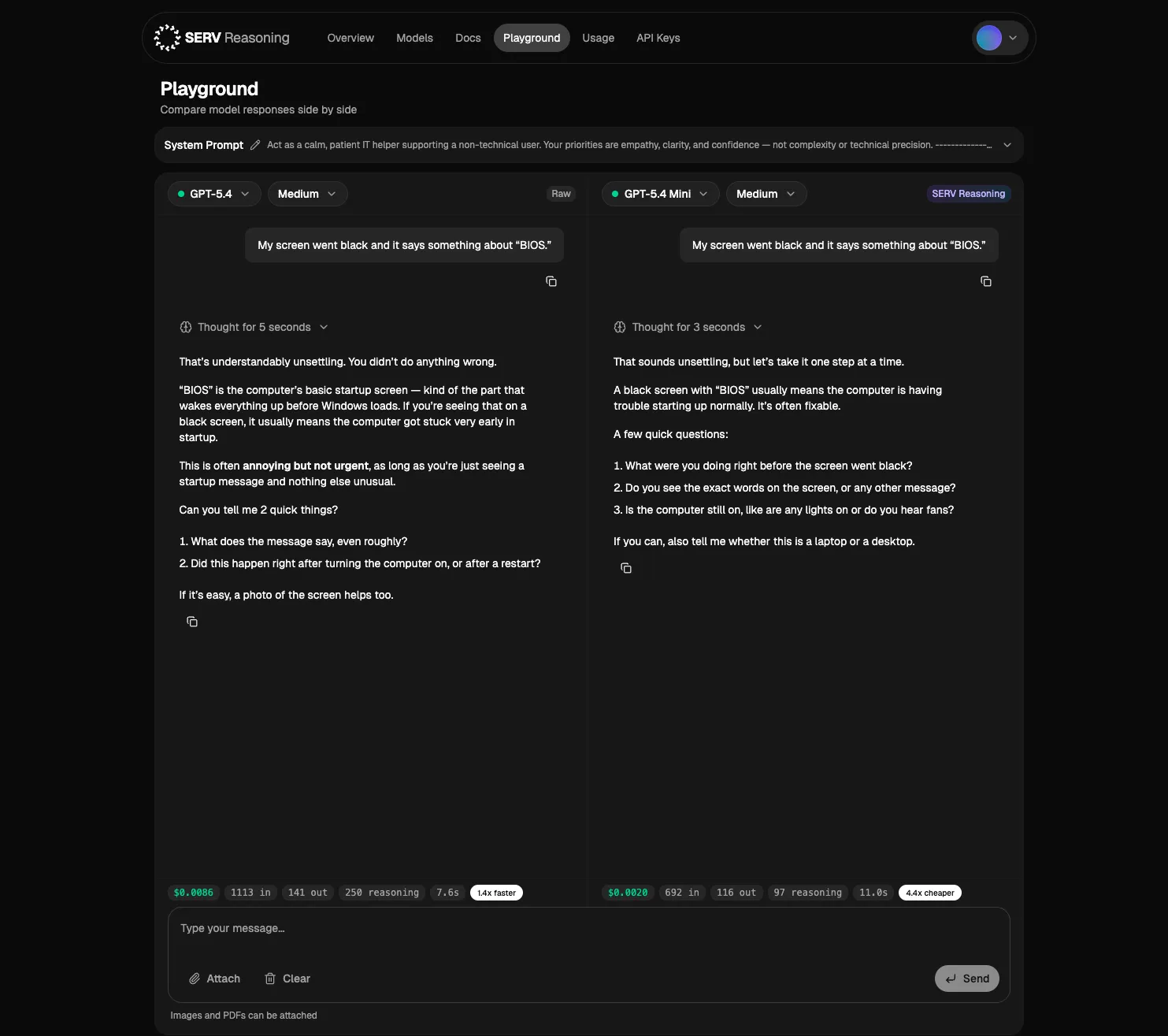
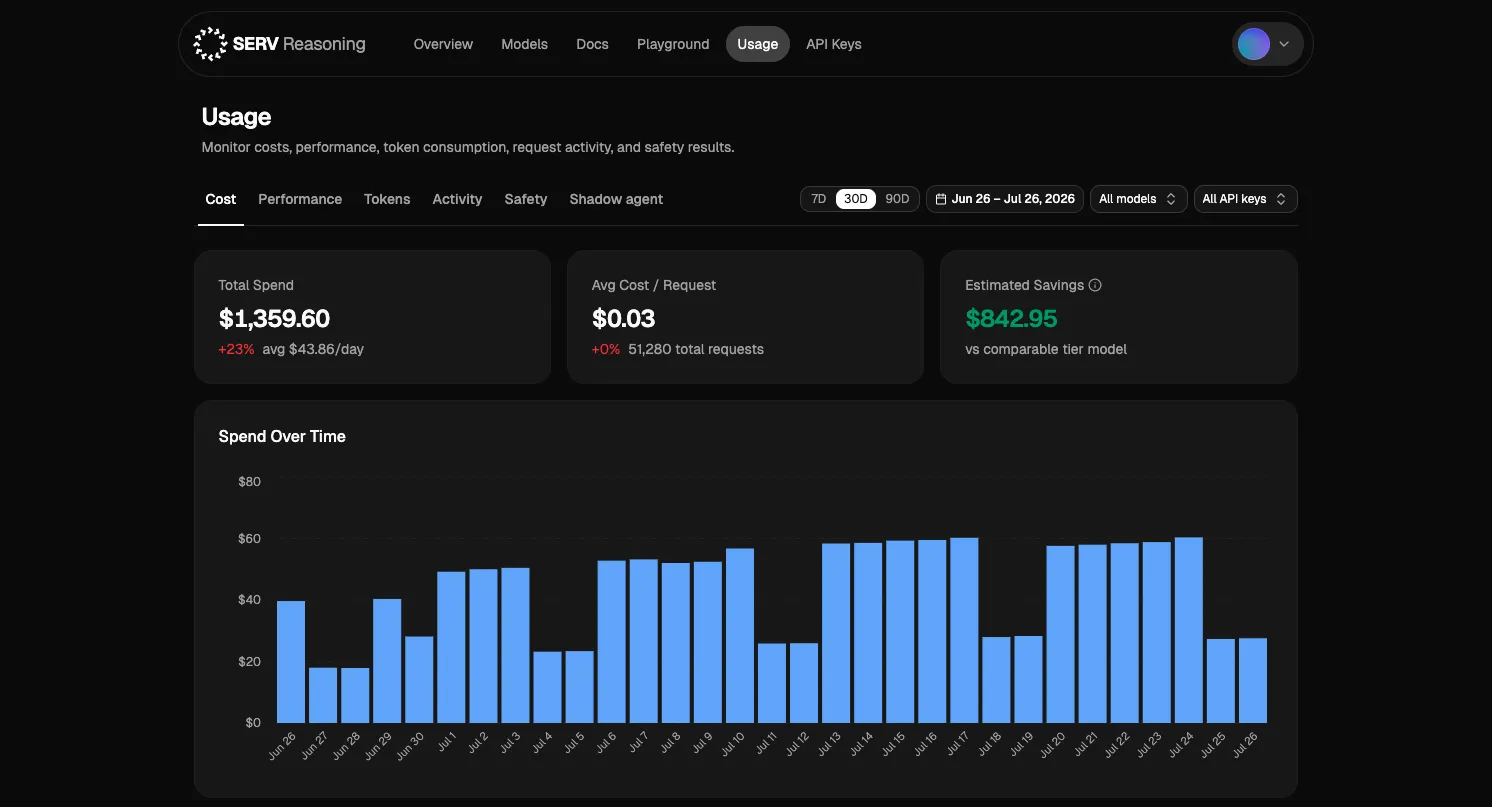
OpenServ Reasoning is an LLM inference gateway. Customers point their existing OpenAI- or Anthropic-compatible SDKs at it without rewriting any code, and the gateway transparently improves and governs each request before forwarding it to the underlying model providers. Every call passes through a reasoning harness: versioned prompt-engineering strategies, safety filtering with blocked-request reporting, structured-output validation with an automatic repair-and-retry loop, and an automated review pass. Usage is metered against a prepaid credit balance in real time.
The product is a Turborepo monorepo of six applications: the inference proxy itself (chat completions, Anthropic messages, and the Responses API, all with streaming), a management and billing API, a customer console, an internal admin console, an AWS Marketplace intake service, and a background usage replicator. Shared packages include a publishable Vercel AI SDK provider and a pluggable code-execution sandbox with E2B and local Docker backends. The console is currently invite-only.
My role
Full-stack engineer across the gateway, the management API, and both consoles, from the proxy’s request pipeline (strategy, transform, dispatch) through the billing ledger to the customer-facing playground UI.
Highlights
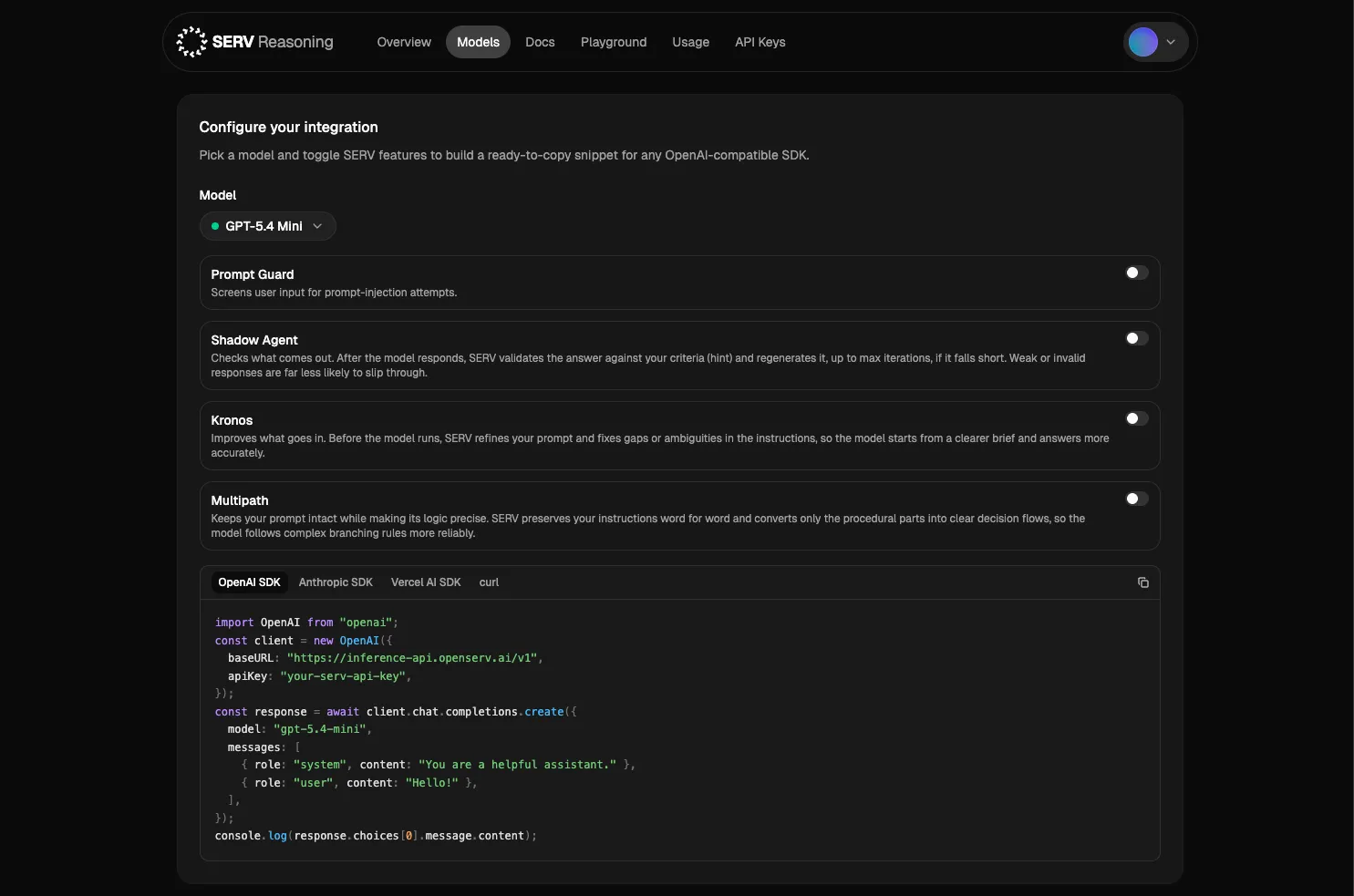
- Drop-in OpenAI and Anthropic API compatibility with streaming. The proxy is provider-agnostic, with model mapping and fall-through routing across upstream providers.
- Structured-output validation and auto-repair. A validator-model pipeline checks tool calls and structured output, then retries or repairs failed completions automatically.
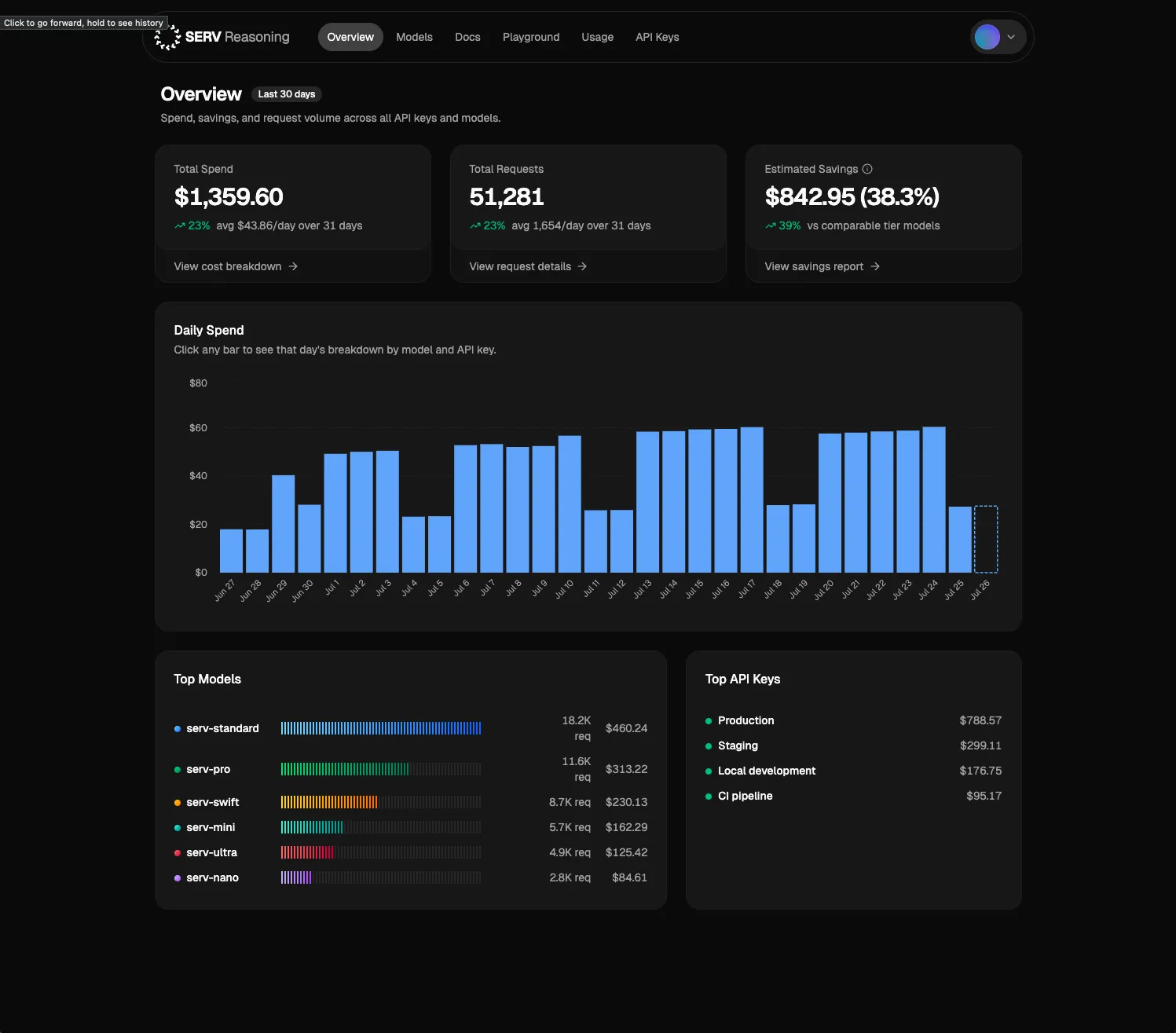
- Prepaid metered billing. Every request gets a preflight credit check. Behind that sits a credit ledger with Stripe checkout and auto top-up, invoice generation, and AWS Marketplace metering for marketplace customers.
- A pluggable secure code sandbox behind one contract, with E2B and local-Docker providers selectable by configuration.
- A publishable AI SDK provider, so the platform can be consumed like any first-class Vercel AI SDK model.
Images